
Beyond Traditional Procurement tactics: Expanding Supplier Choice with Promitea

How a mid-sized services company used structured digital sourcing to identify alternative suppliers, challenge incumbent relationships, and build a more competitive procurement process.
How a mid-sized services company used structured digital sourcing to identify alternative suppliers, challenge incumbent relationships, and build a more competitive procurement process.
The Challenge
The company had already established Excel-based spend analysis and internal procurement best practices. It understood its purchasing volumes and had reasonable visibility into expenditure. The remaining challenge was turning that information into greater commercial leverage.
Several purchasing categories depended heavily on established suppliers. Finding credible alternatives required market research, technical validation, and coordination with internal stakeholders who were accustomed to existing supplier relationships. And there was simply never enough time to investigate the supply market in detail. Incumbent suppliers benefited from this dependency, making competitive sourcing difficult even where opportunities for improvement existed.
In short, the procurement team needed to move beyond spend transparency toward more proactive supplier discovery, competitive tendering, and a sourcing process that business stakeholders would support.
The Approach
The team selected several operational purchasing categories, covering wellness equipment, guest communication systems, and technical infrastructure, to test a more structured sourcing approach through Promitea software.
The initial pilot combined four activities:
• Requirement clarification: Consolidating technical specifications, quantities, quality expectations, and delivery requirements into consistent sourcing documents.
• Supplier discovery: Combining AI-assisted research, manufacturer websites, conventional searches, and existing supplier information to identify credible alternatives.
• Digital RFQ preparation: Organizing specifications, supplier information, and commercial requirements into a structured sourcing workflow supported by Promitea.
• Stakeholder alignment: Reviewing priorities with the procurement director and emphasizing comparable offers, supplier suitability, and operational risk rather than simply maximizing supplier numbers and pressure on price.
Promitea provided a framework for supplier engagement, standardized quotation collection, and transparent bid comparison. The pilot focused on supplier research and RFQ preparation, with other platform capabilities demonstrated rather than tested through a complete live tender.
The Outcome
The principal improvement was in sourcing readiness and supplier optionality: the company finally had a basis for approaching unfamiliar suppliers and assessing them against incumbent offerings.
Furthermore, Promitea demonstrated how supplier discovery, tender preparation, and bid evaluation could be connected without replacing the company's existing procurement practices and supply base management philosophy.
Key Takeaways
Digital tools reinforce existing capabilities. Promitea is a tool for buyers to do their job better, faster and more efficiently.
Competitive leverage puts pressure on “lazy” incumbent suppliers. You do not have to change them but open tender through Promitea and timely e-auction let them know that times have changed.
Better specifications create more competition. Promitea fosters collaboration with internal customers and discussion about supplier ideas. This generates savings without cutting supplier margins.
AI assistant helps buyers along the procurement process. Promitea strongly believes that AI streamlines and increases quality of some procurement phases. But AI remains a support for human decisions.
When Procurement Expertise Meets the Promitea E-Procurement Platform
A real-life procurement case from a mid-sized services company. Buyers leveraged Promitea e-procurement tool to tackle the practical challenges of supplier discovery, incumbent dependency, digital sourcing, and organizational adoption.
The Challenge of moving from spend transparency to active sourcing
The procurement function of a mid-sized hospitality services company had already developed a solid procurement foundations.
(1) Excel-based spend analysis provided visibility into purchasing patterns, while established internal best practices supported routine procurement activities.
(2) The challenge was not a lack of data, procurement team capabilities or basic procurement discipline either. It was the difficulty of translating existing knowledge into a more competitive supplier landscape.
(3) In several purchasing categories, the organization relied on long-term suppliers with established relationships and proven delivery histories. These relationships helped maintain operational continuity, but they also reduced the pressure on suppliers to compete. Without qualified alternatives, procurement had limited leverage when discussing prices, service conditions, or contractual improvements.
The company's procurement team recognized that simply analyzing expenditure more thoroughly and doing more of the same would not solve this problem. It needed additional sourcing capabilities: finding new suppliers, developing credible alternatives to incumbents, and introducing more systematic competition.
However, increased competition also created internal challenges. Operational stakeholders had good reasons to prefer suppliers whose products and services they already understood. Introducing unfamiliar suppliers raised concerns about product quality, technical compatibility, delivery reliability, service standards, and continuity of operations.
The procurement team therefore faced two connected tasks: expanding the external supplier market and building internal confidence in the resulting sourcing decisions.
Defining the procurement priorities
The procurement director and the team concluded that the company already exploited all traditional procurement tactics and that it was time to begin testing new sourcing methods.
The team was not trying to discard established procurement practices and relationships. Instead, the objective was to strengthen them with new supplier involvement, requirements definition to open the market, competitive RFQ with reverse auctions, and supplier final negotiation.
Promitea was selected as the digital framework for exploring this more active sourcing approach.
The case for Promitea as the procurement tools
A key internal discussion concerned the role of technology and the utility of a procurement software. The procurement director wanted to understand what a digital sourcing platform could contribute beyond the spreadsheets and procurement practices the company already used.
It turned out that the existing procurement process has significant blind spots and did not allow for procurement practices the team felt should be used. Promitea software filled both these gaps- a focused sourcing workflow and a wider range of procurement tactics.
Selecting the pilot purchase categories
Rather than beginning with a broad transformation , the procurement team focused on a few purchase categories that would provide valuable feedback about what works. The selected categories included wellness equipment, guest communication technology, and technical infrastructure equipment. Each involved its own group of internal stakeholders, technical characteristics, quality expectations, delivery considerations, and supplier capabilities.
This variety was important. A procurement tactics that works for relatively standard equipment may backfire when applied to technically specialized products. And vice-versa.
For each category, the team examined product specifications, anticipated quantities, quality standards, delivery expectations, and relevant commercial criteria. The preparation work exposed a recurring sourcing problem: the information available is not sufficiently structured to support a competitive tender. Obviously, specifications that are incomplete or open to interpretation make offers difficult to compare. The team therefore treated requirements clarification as a prerequisite for effective market engagement and worked hard with internal customers and technical gatekeepers to address this fundamental obstacle.
Expanding the supplier universe without sacrificing quality
With requirements established, the team turned to supplier discovery. The research process combined AI-assisted supplier identification with conventional search engines, manufacturer websites, and available internal supplier information.
Finding a supplier that appeared to offer a particular product was relatively straightforward. Establishing whether that supplier could satisfy the company's specifications and operating requirements required an in-depth review. Hence, potential suppliers were assessed against practical criteria, including their product portfolios, technical capabilities, geographic coverage, delivery options, service capabilities, and relevant industry experience.
Careful supplier qualification also helped address internal resistance. Business stakeholders were more likely to consider alternatives when procurement could explain why each candidate deserved evaluation, rather than presenting unfamiliar supplier names without supporting evidence.
Converting preparation into an actionable multi-criterion RFQ
Supplier research alone would not resolve the company's incumbent dependency. To create genuine competitive pressure, potential alternatives needed to be incorporated into a structured sourcing process.
The team therefore moved from market research to RFQ preparation. To overcome internal resistance, the RFQ leveraged the multi-criterion approach organized around technical product specifications, references, detailed commercial conditions and quantities, internal switching costs, and supplier guarantees.
Promitea software provided a framework for structuring these requirements. The platform's workflow “pushed” buyers to define the sourcing strategy (e.g. multiple rounds, e-auction, sealed bids) specify all important selection criteria. The software then took care of inviting potential suppliers into a sourcing event, collecting and evaluating quotations in standardized formats, and even recommending next steps.
Managing stakeholder adoption and supplier risk
The improved sourcing created a tension between two legitimate priorities.
Procurement wanted to increase supplier competition and strengthen commercial leverage. Operational stakeholders wanted to maintain service quality and avoid disruption.
The procurement team, therefore, needed to consider how alternative suppliers would be received by the people responsible for using the purchased products. Established suppliers often retain their position because internal customers know what to expect from them. Even when procurement identifies potentially more competitive alternatives, stakeholders may be reluctant to accept the risk of change.
Hence, the procurement team kept emphasizing that commercial attractiveness could not be treated independently from supplier suitability. In particular, joint supplier screening established whether a candidate was sufficiently credible to secure the contract. This collaborative approach made internal conversations more constructive. Instead of asking stakeholders simply to accept a new supplier, procurement discussed alternatives against predefined criteria and made the associated trade-offs visible.
Higher quality sourcing process as the new standard
The main result was an improvement in the company's ability to prepare for competitive sourcing. Working with Promitea produced organized requirement information, researched supplier alternatives, high-quality RFQ preparation and processing, and procurement recommendations.
• First, requirements became more structured, making it easier to identify what potential suppliers would need to demonstrate before being considered suitable.
• Second, the supplier-search process moved beyond familiar contacts and existing supplier records. AI-assisted research, supported by independent checks, provided a broader basis for identifying alternative sources of supply.
• Third, the team developed a clearer understanding of how those alternatives could be brought into a standardized RFQ process.
Promitea played a useful role in connecting these activities within a coherent sourcing workflow. Rather than treating supplier discovery, tender preparation, and evaluation as unrelated tasks, the approach showed how information could move between the stages.
Tangible results
The exercise established a measurable reduction in purchase prices, a completed renegotiation with incumbents, and several end-to-end supplier switches. The pilot also helped define where additional effort would be needed to reap more financial benefits. Implications for the procurement function
Key Takeaways for e-procurement in your company
Effective sourcing transformation does not begin with replacing existing procurement practices. It begins with identifying where current practices do not work and introducing new tools, supplier options, and decision processes to close that gap.
(1) E-procurement extends existing capabilities
Promitea offered a structured approach to supplier discovery, RFQ preparation, and comparative evaluation. Its potential role was complementary to existing tools and established procurement practices. For a mid-sized services company, the key to success was to focus on specific business problems, validate the workflow with real requirements, and expand adoption as the organization gains confidence.
(2) Leverage what you already have through the e-procurement software
The company already had visibility into its purchasing expenditure. What it lacked was a systematic way to convert that visibility into a broader and more competitive supplier base. Promitea, as a sourcing tool became particularly relevant when the constraint shifted to smooth sourcing process.
(3) Supplier quality matters
AI-assisted discovery can broaden market coverage, but additional supplier names have limited value unless they meet real operational and technical requirements. Internal customer involvement and robust multi-criterion selection is key for the credibility of the e-procurement tool. Otherwise the tool will be blamed for the procurement/ internal customer miscommunication and contradictory requirements.
(4) Competitive tendering begins with clear requirements
The quality of RFQ preparation directly influences the usefulness of subsequent supplier comparisons. Specifications, quantities, delivery expectations, and evaluation criteria must be sufficiently consistent to produce comparable quotations. A good e-procurement tool must be able to guide the buyer through quality tender preparation.
(5) Challenging incumbents requires internal credibility
Vendor lock-in is not resolved simply by identifying alternatives. Procurement must address stakeholder concerns about quality, reliability, and continuity. Transparent qualification criteria help make those discussions evidence-based rather than dependent on supplier familiarity.
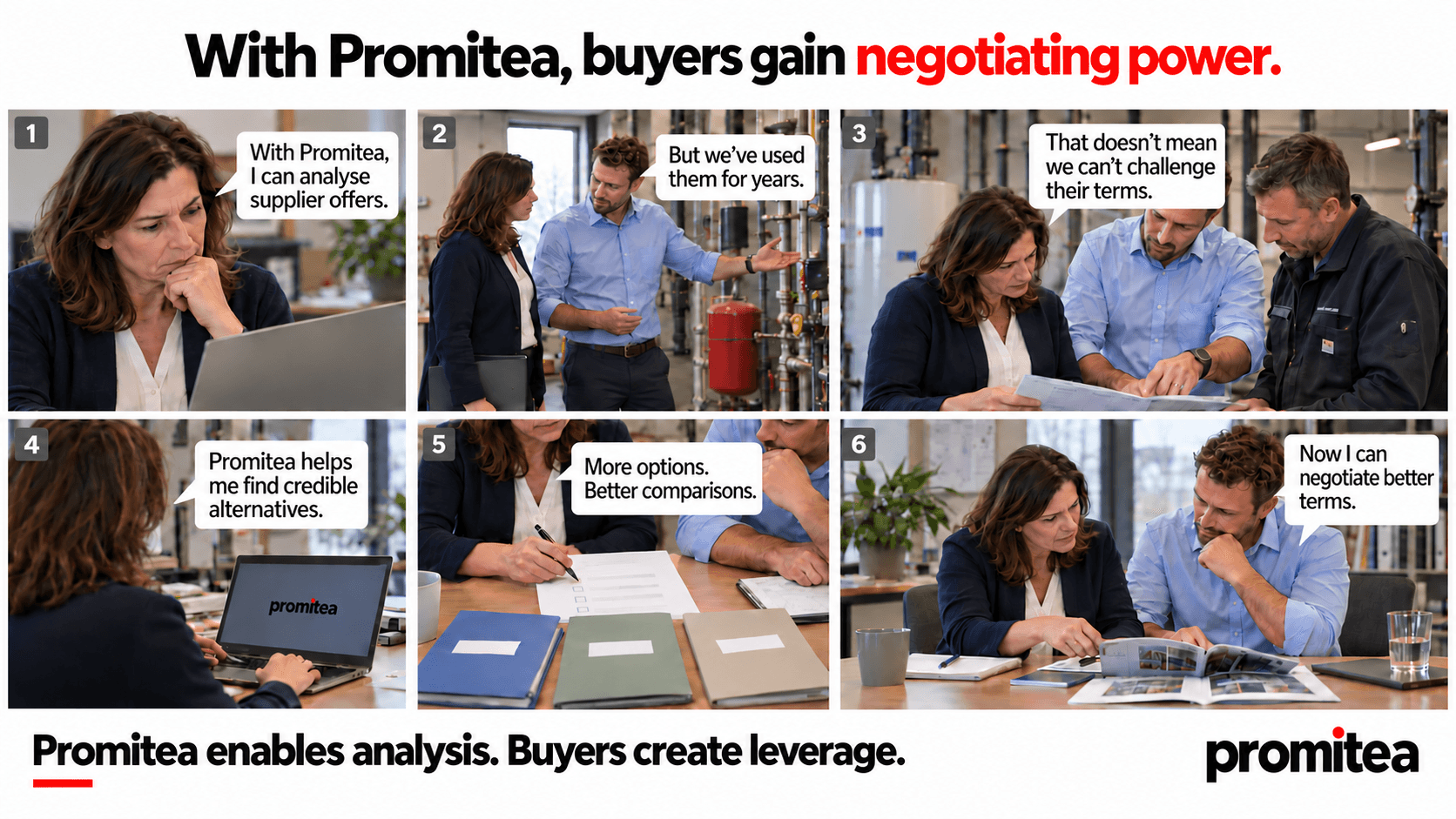
How a mid-sized services company used structured digital sourcing to identify alternative suppliers, challenge incumbent relationships, and build a more competitive procurement process.

Jana Jůzlová has more than 20 years of experience in corporate procurement in manufacturing companies. She specializes in strategic procurement consulting and helps companies turn procurement and logistics into a competitive advantage.
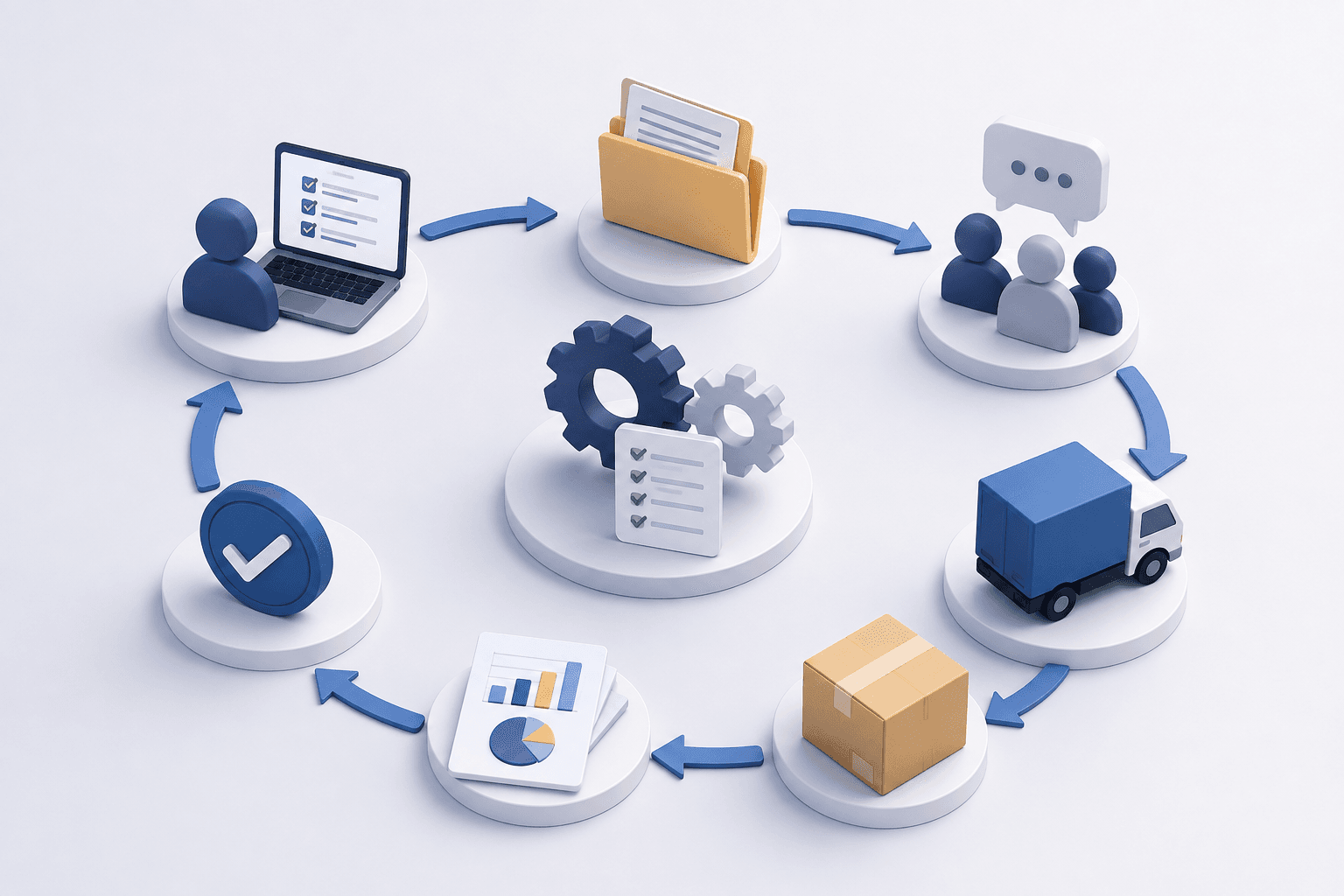
For busy procurement teams, it’s easy to lose track of deadlines. One RFQ may be closing today, while another is still waiting for supplier responses.
Return on investment within the first year of project implementation.*
*The ROI estimate is based on real data gathered from our clients and their successfully completed projects.
Join us in the world of Promitea.
Our team is here for you.